Why ERP clicks matter
We just released a case study on how many clicks it takes to get to each operation in PAX. 163 destinations were measured.
When we started building PAX, our primary goal was to make everything as easy as possible to access, and as fast as possible to load. We've lived through systems where it takes a long time to find an element buried in nested menus, then another several seconds to load, and then another 3-4 clicks before we're actually entering the data we set out to log in the ERP. The systems that were supposedly made to streamline our operations were slowing us down. We just want to log what we need to log so we can keep working on the important stuff.
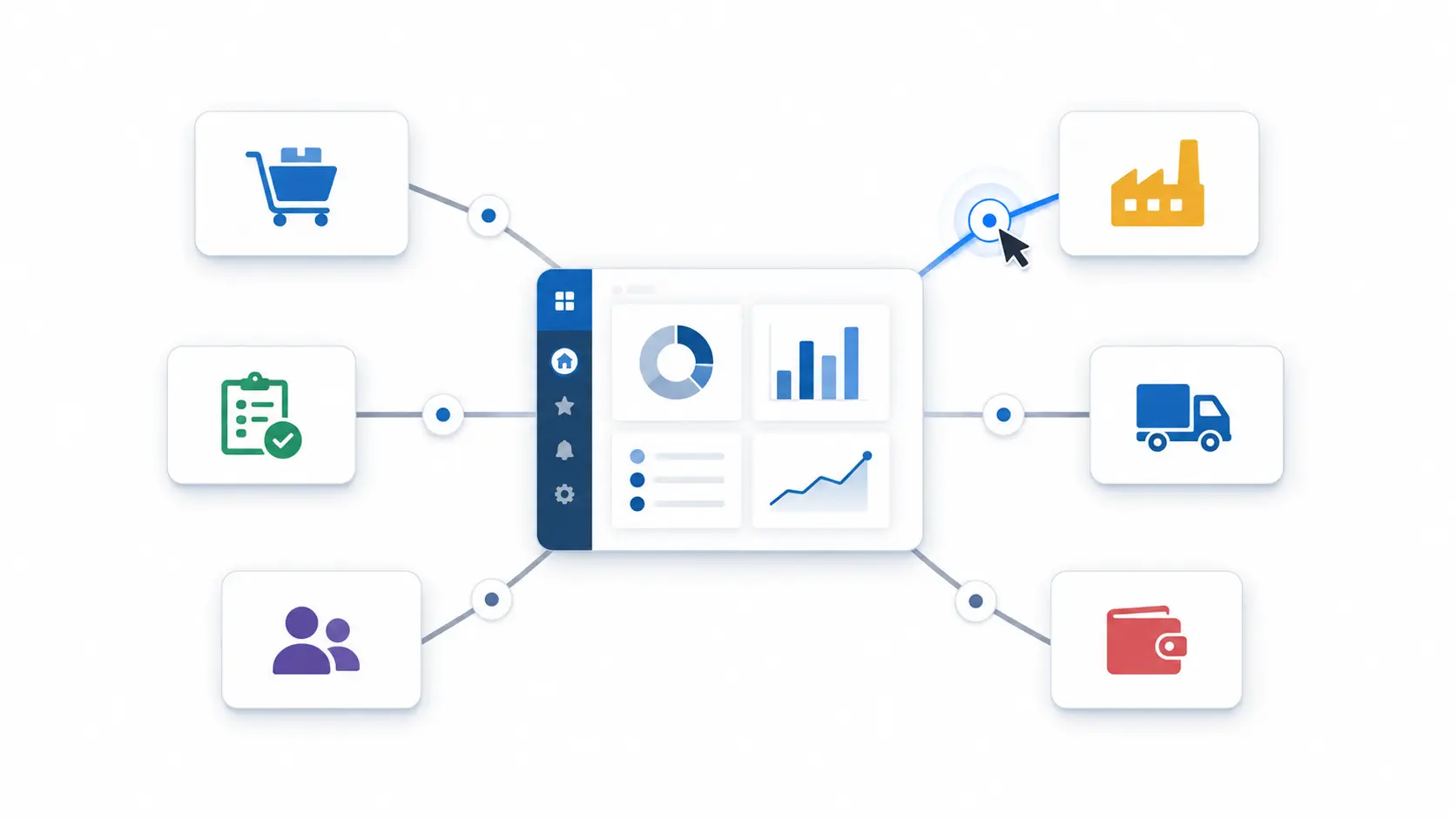
Those small delays add up.
A small manufacturer does not use ERP once a day. Your team is entering orders, checking inventory, issuing materials, receiving purchase orders, creating shipments, looking up customers, and reviewing invoices throughout the day.
If those actions are buried, people wait.
They write it down. They keep it in their head. They update the system later. Sometimes later means the end of the day. Sometimes it means the end of the week. That is when the data starts getting less accurate.
The goal of ERP should be simple: make the right thing easy to do when the work is happening.
In the PAX click study, the average destination was 2.17 clicks from the dashboard. The median was 2 clicks. 69.3% of measured destinations were reachable in 1 to 2 clicks, and 92.0% were reachable in 1 to 3 clicks.
A few examples:
- Create a sales order: 1 click
- Open sales orders: 1 click
- Invoice list: 1 click
- Inventory parts: 1 click
- Receiving queue: 1 click
- Issue materials queue: 1 click
Not every task should be one click. Some actions need a few steps because the user has to select a record, review details, or confirm what they are doing. Lot-controlled material issue, work order detail, and historical drilldowns should have some structure around them.
But common work should not be buried.
For us, this is the point of PAX. We are not trying to build the most complicated ERP. We are trying to build the system a small manufacturing team will actually use every day.
That means fast screens, direct access, and fewer places where the user has to stop and think, “Where is that again?”
Clicks are not everything. Good accounting, inventory accuracy, lot tracking, backups, and implementation all matter too. But if the system is hard to move through, the rest of it suffers.
ERP should help your team keep working.
It should not become the work.
Written by
Matthew Obey
May 22, 2026