How Impulse Medical Cut ERP Costs in Half and Gained a CRM They Actually Use
At a Glance
| Metric | Before PAX | After PAX |
|---|---|---|
| Monthly ERP cost | $1,900 | $900 |
| Monthly savings | — | $1,000 |
| Cost reduction | — | 53% |
| Module load times | 7–8 seconds | Under 1 second |
| CRM system | None (spreadsheets and paper) | Fully integrated |
| Implementation cost | $15,000 | $0 |
| Data migration cost | $0 | $0 |
| Estimated time saved (team) | — | ~17 hours/month |
The Company
Impulse Medical Technologies has been manufacturing neuro-diagnostic supplies since 1975. Their products support electromyography (EMG), nerve conduction studies (NCS), electroencephalography (EEG), intra-operative neurophysiological monitoring (IONM), and electroretinography (ERG). Operating under the brand The Electrode Store, the company ships thousands of products each month, up to 50 packages per day, and maintains rigorous quality standards across ISO 13485, MDSAP, and CE Mark certifications.
The Challenge
In 2020, Impulse Medical implemented a legacy ERP system, investing $15,000 in initial implementation costs, followed by $22,800 per year in licensing for 6 concurrent users. The system worked, but over time, daily frustrations compounded.
Every module, whether Sales Orders, Inventory, Work Orders, or Purchase Orders, took 7–8 seconds to load. For a team processing up to 50 shipments per day, each touching the sales, shipping, and invoicing modules, those seconds added up. Navigating to the right screen meant scrolling through dense menus of 50+ text items, clicking several levels deep, and waiting again. A single reorder point analysis report took 3–5 minutes to generate. Exporting any document to a local machine took at least a minute due to VPN overhead.
Beyond speed, the system's complexity and lack of user-friendly modules created its own problems. The bank reconciliation process was very difficult to use. The legacy ERP would mysteriously group system transactions together, making it hard to reconcile accurately. Custom reports required expensive consultant quotes. Integrating with their Shopify webstore would have cost thousands. Many data fields, including customer name, address, and part description fields, were arbitrarily limited to just 30 characters. And the CRM module was effectively unusable, leaving the sales team to manage prospects with Excel spreadsheets and paper files.
There was no single breaking point. It was death by a thousand cuts. The report that took 5 minutes to load when they needed it now. The endless clicking through submenus. The quotes for thousands of dollars just to get basic customizations. This is the complexity tax that quietly drains small manufacturers.
Why PAX
The experience of implementing their previous ERP in 2020 made the prospect of switching systems again daunting. The slow go-live process, the hours of training, the painful data mapping were all still fresh. The team briefly evaluated other options but kept seeing the same patterns: complex onboarding, opaque pricing, and costly implementation.
PAX took a different approach. Rather than asking Impulse Medical to navigate another drawn-out implementation, the PAX team manually exported the company's data from their legacy system, cleaned and mapped it to PAX's database structure, and imported everything at no charge: customers, order history, purchase orders, and work orders. From there, PAX walked the team through how their existing workflows translated to the new system, and when a process the team needed wasn't yet available, PAX built it by making use of its flexible architecture.
Three factors made the decision clear for Impulse Medical:
- Zero onboarding cost. The entire onboarding was handled by PAX with no implementation or training fees. Most modules were intuitive enough that users needed little to no training.
- Integrated CRM. PAX included a fully integrated CRM , something the team had never had in a usable form.
- Seeing it side by side. Running both systems in parallel during a trial period made the difference in speed and simplicity immediately obvious.
Implementation
Impulse Medical decided in December 2025 to go live on January 1, 2026. When the team returned to the office after New Year's, everything was up and running with their full transaction and order history imported. Only the owners were involved on the Impulse Medical side. No outside consultants were needed.
Because PAX was a new product, the team chose to run both systems in parallel for three months as a self-audit. During that period, minor bugs were discovered and fixed by PAX, often within the same day. Some features were added based on how the team actually worked, allowing PAX to better understand and support their specific workflows. After three months, Impulse Medical fully switched over to PAX for Q2 2026.
Results
Cost Savings
Impulse Medical's ERP spend dropped from $1,900/month to $900/month, a 53% reduction that saves $12,000 annually. PAX's ease-of-use also resulted in substantial time savings, boosting the team's efficiency and productivity. With zero implementation, training, or data migration costs, the savings were immediate from day one.
Time Savings
The most tangible daily improvements are in the speed and ease-of-use of PAX. Every module interaction that previously took several seconds (7–8 seconds of load time plus ~10 seconds of menu navigation) now takes 2–3 seconds through PAX's single-dashboard interface. Across the team's monthly volume of roughly 3,300 module interactions for order processing alone, plus work orders, purchase orders, reporting, and customer lookups, the estimated time recovered is approximately 17 hours per month.
Specific examples tell the story clearly:
- Full customer list (5,000 customers with contact info, terms, website, categorization, shipping preferences, and credit limits) loads in 0.8 seconds.
- Customer address lookup across 13,000 records loads in 1.2 seconds.
- Full CRM prospect list with 1,300 records loads in 0.3 seconds.
- Reorder point analysis that previously took 3–5 minutes opens in 0.3 seconds.
- AR and AP aging reports load in 0.2 seconds each.
These are not theoretical benchmarks. They reflect the same data, running the same analyses, for the same business.
CRM: From Nothing to Fully Operational
Before PAX, Impulse Medical had no functional CRM system. The sales team tracked prospects with Excel spreadsheets and paper files. Starting in Q4 2025, the team began using PAX's integrated CRM module, and new sales have been flowing through it ever since. The team now manages a full prospect pipeline with drag-and-drop stage management, tracks daily activity targets, sends email campaigns, and accesses complete customer history from a single place: order history, contact info, communications, and quotes all in one view.
Operational Improvements
Data quality improved with standardized formatting and cleaner records, reducing typos and inconsistencies. The team reports improved confidence in the system, easier handling of customer calls thanks to fast data access, and audit readiness with full transaction history easily accessible. The team loves working in PAX. It fits naturally alongside the strong anti-bureaucratic company culture at The Electrode Store, which values personal relationships, productivity, and "working smarter and not harder."
Day-to-Day with PAX
Six users work in PAX daily across sales, operations, shipping, and finance. The features they rely on most:
CRM and sales management. Scheduling tasks, planning sales days, setting target activities, running email campaigns, and managing the full prospect pipeline, all from within the ERP. For a team that previously had no CRM at all, this has been transformative.
Customer lookup. When a customer calls and can't provide their company name or account number, customer service reps search by any field (zip code, street address, email, website) with results returning in milliseconds.
Simplified work orders. Creating, issuing materials, logging labor, and completing work orders follows a streamlined, few-step process compared to the multi-module workflows the team navigated previously.
Single-dashboard navigation. Instead of scrolling through dense menu trees, everything is accessible from one clean dashboard. Reports, customer analytics, and historical data are all within one or two clicks.
Shipping integration. FedEx labels are generated directly from the shipping module with no data re-entry and no third-party software. Synchronization between PAX and their Shopify website inventory takes less than one minute via CSV export, with a direct API integration planned.
Lot and expiration tracking. Some products require lot numbers, some require expiration dates, some require both, and some require neither. Each is configured per item, and the system handles receiving workflows accordingly.
In Their Own Words
"Using PAX ERP is like a breath of fresh air to us, after using other ERP systems that are needlessly laborious, time-consuming, or complicated. PAX ERP is designed by people who have actually performed the functions and incorporated their improvement ideas into the design of the PAX modules. For example, the CRM module is quick and easy with the flexibility to be as detailed as you want to be; the operations functions are clear, logical and efficient; and the accounting functions and reporting are simple, accurate and flexible. This system frees up time for our team members to do more valuable work: salespeople have more time to sell, manufacturing team members can focus on production, and finance and business leaders have more time to analyze and strategize!"
— Steve O., President & CEO, Impulse Medical Technologies, Inc.
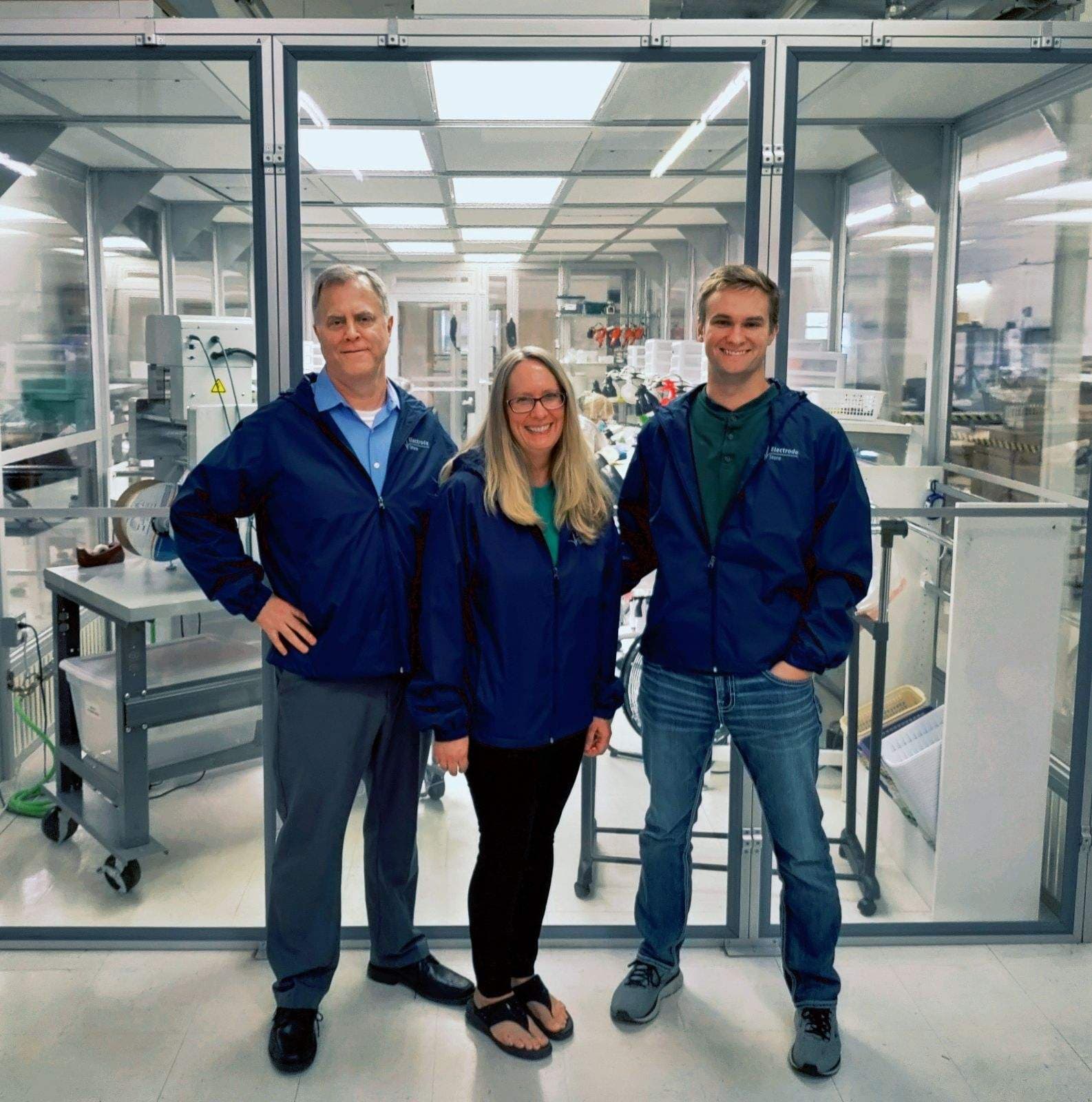
Impulse Medical Technologies has been manufacturing neuro-diagnostic supplies in the USA since 1975. Learn more at electrodestore.com.
PAX ERP is a cloud-based ERP and CRM platform built for small manufacturers. Learn more about PAX ERP or view pricing.
Your team deserves an ERP that works this fast
Tell us about your operation and we'll show you what the switch looks like.